
“Not by virtue and valour, like the noble Aryans,
But in mockery and scorn, like the demons.
By force they have taken away from men
They have demanded again the tribute, a heavy impost.”
The Ballad of King Vahram (transl.) – trad/Farya Faraji
Horsey mistypes
Disclaimer: Although we wrote this on April 1st we actually believe that everything that we’ve written here is actually true..
For over 2,200 years, the Chinese calendar has assigned each year to one of the 12 animals of the zodiac in a duodecennial cycle. Each animal’s distinct traits are believed to manifest in those born under its sign. Beyond the animal cycle, the Chinese zodiac also rotates through the five traditional elements—earth, wood, fire, metal, and water.[1]
February 17th ushered in the Year of the Horse—a symbol of forward movement, independence, and endurance. Crucially, it is also the Year of Fire. Ergo, we have entered the Year of the Fire Horse: a rare, blazing return that only comes around once every 60 years. For many of us, this will be our final Year of the Fire Horse—our last shot at it.
The horse is deeply revered in broader Chinese culture thanks to its historical roles in agriculture, transport, and warfare. In the zodiac, it specifically symbolizes strength, grace, endurance, loyalty, freedom, and success. It’s a good symbol to be born under (though, in its own way, so is each of the other 11). This is reflected in the traditional saying “When the horse arrives, success arrives.” Its energy is inherently yang—active, dynamic, life-generating, and steeped in ambition and vitality.[2]
The most recent Year of the Horse (or Bing-Wu Year) was 2014, but that was tempered by the wood element and we all know how stories of wooden horses play out – invasion, destruction, deception….
The Fire Horse is a different beast entirely. It shares the horse’s core traits—power, stamina, independence, loyalty, and prosperity—but each is amplified by its combination with fire, the most volatile of the five traditional elements.
Because the aftermath of fire is growth, the Fire Horse provides immense opportunities. Individuals are encouraged to push forward with personal goals, embrace change, and endure the process for the ultimate reward. The Fire Horse is also a fast-sprinting animal, indicating that 2026 will see events unfold rapidly. Experts note the year will demand “bold action and risk-taking,” a stark contrast to the cautious progress of 2025’s Year of the Wood Snake.[3]
Historians point out that Fire Horse years historically disrupt the existing order, carrying a long-standing association between Bing-Wu years and periods of social or political instability.
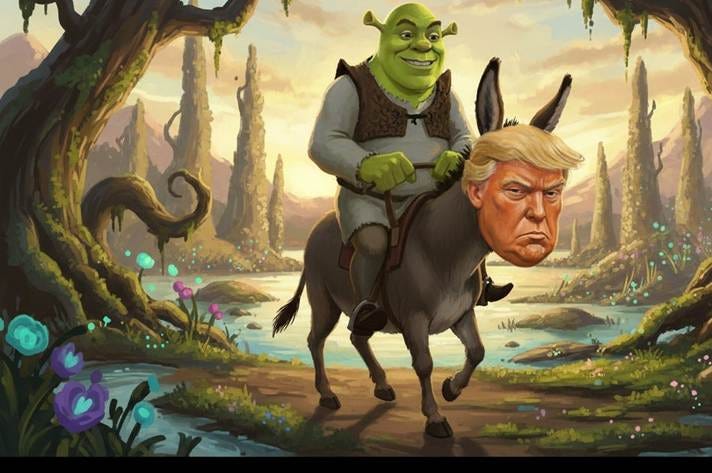
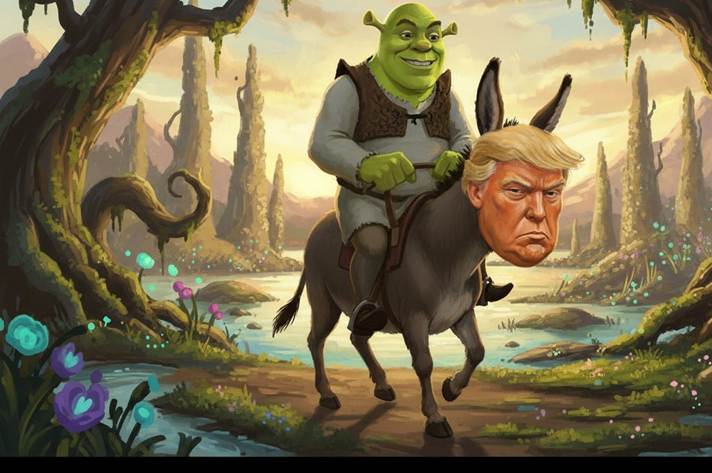
Enter the donkey.
The bipolarities of America’s single party state[4] are visually represented by cartoons of a donkey and an elephant.
The donkey association dates back to the 1828 presidential election—a rematch of 1824, where Andrew Jackson won the popular vote but lost a contingent election in the House of Representatives to John Quincy Adams. In 1828, however, Jackson’s electoral triumph was convincing, requiring no House intervention to secure the 7th presidency of the USA.
A stubborn, tough old veteran of the War of Independence and the War of 1812, Jackson had acquired the nickname “Old Hickory.” However, in the mud-slinging 1828 election, his opponents preferred the alliterative insult “Jackass.” Jackson, positioning himself as a man of the people (the white people, that is), decided to embrace the slur and plastered illustrations of donkeys on his campaign posters. Because 1828 was the first electoral victory for the modern Democratic Party, the donkey attached itself to the institution. Several decades later, it was rendered an enduring symbol of America’s visual culture by the maverick cartoonist Thomas Nast at Harper’s Weekly.[5]
Donkeys generally get a pretty rough deal in popular perception, often disparaged as “stubborn” or “stupid” or, as we’ve seen, even being compared to US presidents or political parties.
Horses, when frightened, will often rear up or bolt, whereas when a donkey perceives danger, its default setting is to refuse to move. This is often interpreted as stubbornness but also a tendency to be difficult.
Throughout history, horses were associated with nobility, wealth, and war, while donkeys were seen as the working-class, agricultural “labourer’s” animal, often owned by poor tenant farmers, and tasked with hard, menial labour and low standing.
Consequently, from biblical stories like Balaam’s ass to Aesop’s Fables, Chaucer, Shakespeare, and modern depictions like Shrek, donkeys have tended to represent stupidity, ignorance and a lack of cleanliness. Since the 16th century, “ass” has been widely used as a synonym for an idiot, reinforced by its ‘hindquarters’ anatomical association.
As unfair to donkeys as these representations may be, most of the world seems to be viewing Trump’s utterly ill-conceived attack on Iran that began at the end of month as asinine rather than incandescent or equine.
Really Dumb animals
Koalas have a strong claim to be much dumber animals than donkeys in that their brain to body mass ratio is exceptionally low and this may explain why they are legendarily difficult to train – to the extent that if you take their habitual source of food (eucalyptus leaves) off the branch of a eucalyptus tree, they can’t even recognise them and will starve to death.
But arguably the strongest claim is that of the sunfish. I’m no expert so I’ll quote science blogger, Dr. Noss:-
“Sunfish are the world’s most useless and dumbest animal. But why? First off, sunfish can’t swim like normal fish since they don’t even have a full tail. They aimlessly bob around in the water, relying on their fins to guide them to get around.
This makes them super easy targets for predators, and they end up with bites taken out of them. But since sunfish are full of bones and covered in mucus predators will just spit the pieces out. Sunfish also have brains the size of walnuts kinda like twitter users.
They do feel pain but they really don’t even understand what’s happening to them. Basically the survival instincts of a jellybean Even worse, sunfish are covered in parasites. These parasites feed off their skin, making their lives even more miserable.
They try to float to the surface to let the sun’s rays kill the parasites or wait for the birds to peck them off but it won’t help much. Even when fishermen catch them they throw them back since they are useless. But the worst part is what they eat.
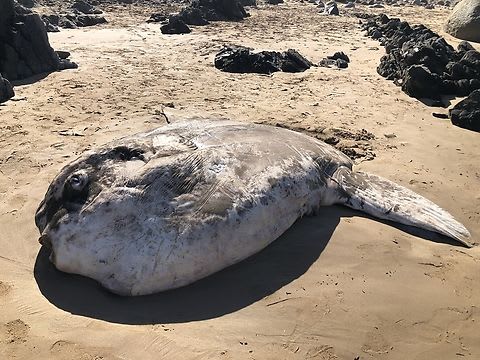
They can’t even close their mouths so they just float around waiting for something to come in like plankton or jellyfish. They have to consume tons of jellyfish just to get enough energy to survive, leading to a pretty bad diet. The only reason they haven’t gone extinct yet is because a female sunfish will lay 300 million eggs. An ocean full of dumb useless mindless blobs. Kinda like politicians I guess.” – https://www.facebook.com/drnosofficial/posts/sunfish-are-the-worlds-most-useless-and-dumbest-animal-but-whyfirst-off-sunfish-/882802921009521/
There are definitely some politicians who fit this bill!
For more information and to speak with our advisors, please contact us at info@mbmg-investment.com or call on +66 2 666 4878.
About the Author:
Paul Gambles is licensed by the Securities and Exchange Commission as both a Securities Fundamental Investment Analyst and an Investment Planner.
Disclaimers:
1. While every effort has been made to ensure that the information contained herein is correct, MBMG Investment Advisory cannot be held responsible for any errors that may occur. The views of the contributors may not necessarily reflect the house view of MBMG Investment Advisory. Views and opinions expressed herein may change with market conditions and should not be used in isolation. 2. Please ensure you understand the nature of the products, return conditions and risks before making any investment decision.
3. An investment is not a deposit; it carries investment risk. Investors are encouraged to make an investment only when investing in such an asset corresponds with their own objectives and only after they have acknowledged all risks and have been informed that the return may be more or less than the initial sum.
[1] https://www.nationalgeographic.com/culture/article/year-of-fire-horse-lunar-chinese-new-year
[2] Ibid
[3] Ibid
[4] The United States is also a one-party state but, with typical American extravagance, they have two of them.”– Julius Nyerere
[5] “The two beasts – the former representing the Democratic Party; the latter, the Republican Party – are mainstays of America’s visual culture, as recognizable as Santa Claus or Uncle Sam. Yet most Americans would be surprised to learn that both political symbols (as well as Santa Claus and Uncle Sam) were popularized, and given their modern forms, by the same maverick cartoonist. His name was Thomas Nast and over the course of his tenure at Harper’s Weekly, from 1862 to 1886, he became America’s first great political cartoonist – and one of its harshest satirists.”
10 Comments
Comments are closed.